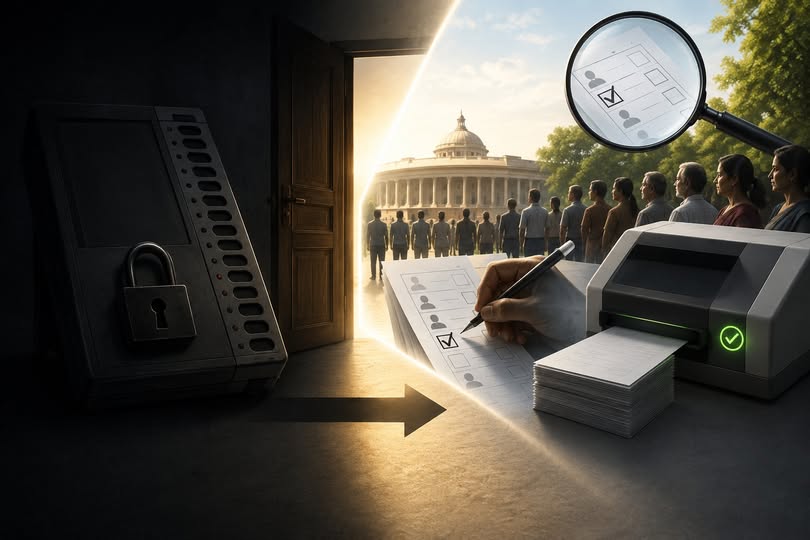

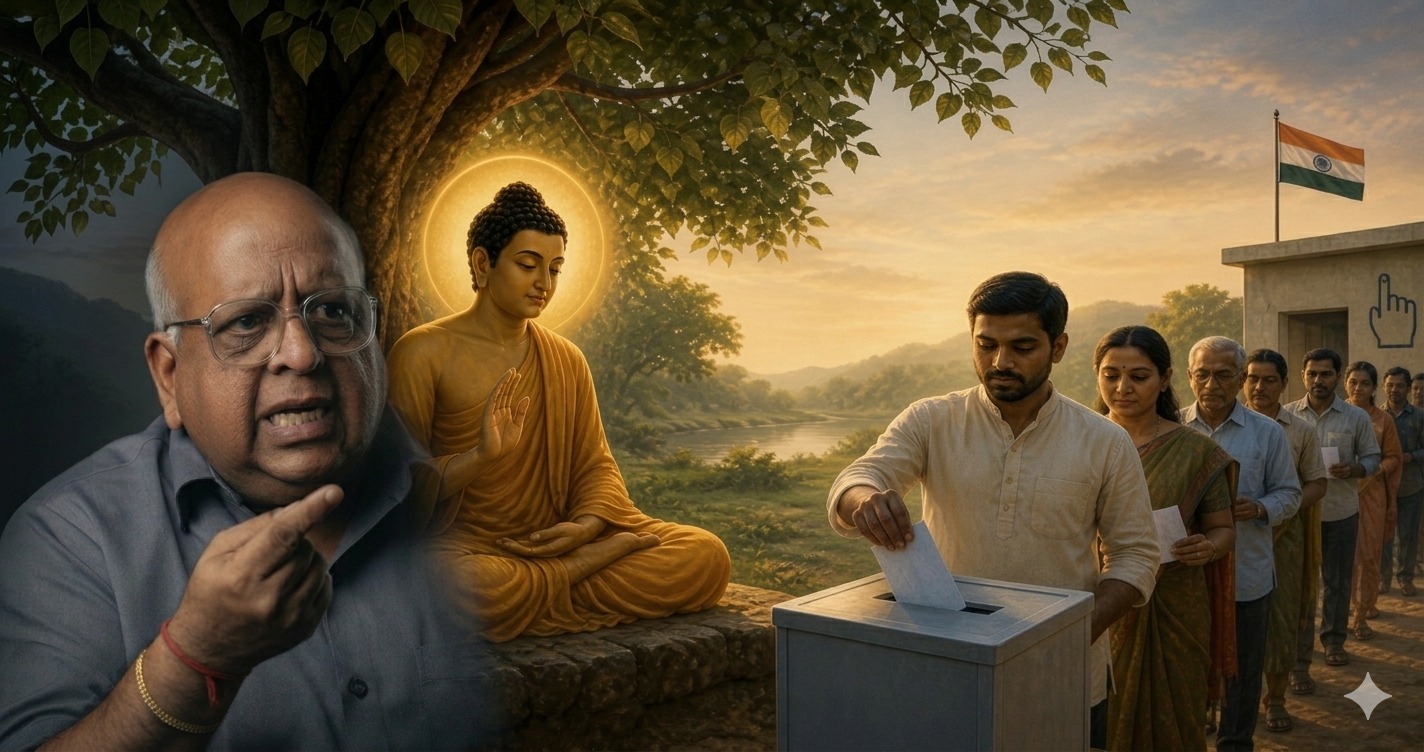
When T.N. Seshan became Chief Election Commissioner in 1990, the Election Commission was a constitutional ornament. It was respected in grand speeches but almost entirely ignored in practice. Elections in that era were a riot of colourful flags, loud rallies, folded hands, and lofty promises, but the festive surface masked a much darker reality.
Behind the scenes, democratic integrity was in a state of collapse. Booth capturing, fake votes cast in the names of the dead, blatant bribery, and the presence of musclemen at polling stations were considered routine. The open misuse of government cars and public money by those in power was simply the way the game was played.
Politicians of the day treated the Commission like a respectable old uncle. He was someone to be greeted warmly with a polite bow and a smile, but he was also someone easily bypassed and never truly feared. The rules were written in books, but they were rarely read and almost never enforced.
Seshan fundamentally altered the atmosphere of that office. He transformed the Model Code of Conduct from a set of polite suggestions into binding law. He began auditing campaign spending with an eagle eye, halted the exploitation of caste and religion for votes, and questioned the turning of temples and mosques into political stages.
To make rigging an uphill battle, he pushed for voter identity cards with photos. He broke local power structures by bringing in officers from outside poll-bound states to oversee the process. In 1992, he took the unprecedented step of cancelling elections in Bihar and Punjab when he determined that fairness had completely vanished.
Thousands of candidates were forced to account for their spending, and many were disqualified. For the first time in the history of the Republic, powerful politicians feared the Election Commission instead of managing it. He proved that the office was not a bystander but the active guardian of the nation’s democratic soul.
On Buddha Purnima, we remember Gautama Buddha not for building temples, but for his refusal to accept illusion. Seshan lived by that same light. He looked at a democracy dressed in ritual and asked one dangerous question: Is this truly fair? Real reform begins when one person stops pretending that a lie is normal.
✦ Chapter 1: Beyond the Fog: A Way of Seeing
A grieving mother named Kisa Gotami once rushed to Buddha, cradling her dead child and begging for a miracle. Buddha asked her to fetch mustard seeds, but only from a house that death had never visited. She ran from door to door; every family offered her seeds, but every family also shared a story of loss.
By sunset, she returned empty-handed, her eyes finally clear. Buddha had not removed her pain, but he had removed the illusion that her suffering was unique. Seshan looked at Indian elections with that same unblinking clarity. Everyone knew booth capturing happened, that “ghosts” voted, and that fear arrived at the polls before the voters did.
Yet, most officials treated this rot as an unavoidable condition, like bad weather. When subordinates told him, “Sir, this is simply how things work here,” his reply was a calm rejection of that reality: “Then things must work differently.” He refused to let the commonality of corruption justify its existence.
✦ Chapter 2: The Unveiling: Right View and Vision
As a young prince, Siddhartha lived within palace walls designed to shield him from the harshness of old age, sickness, and death. One day, however, he slipped past the guards and saw an old man, a sick man, and a funeral procession. Once seen, these truths could not be forgotten. This “clear seeing” became what Buddha called Right View, the courage to face life without the comfort of decoration.
When Seshan entered the Election Commission, he found a similar palace of managed illusion. The office appeared powerful on paper, but in practice, it was treated like ceremonial furniture. Rules existed, yet violations were politely ignored by a system that preferred harmony over honesty. Seshan’s radical act was simply to treat the rules as if they were real.
Government cars were stripped from campaign convoys. Ministers were barred from using public funds to secure votes. Complaints that once vanished into dusty files were suddenly acted upon with speed. The institution had not changed its laws; it had changed its gaze. Reform often begins with the simple, defiant act of refusing to look away.
✦ Chapter 3: The Compass of Neutrality: Dhamma Above Ideology
After his enlightenment, Buddha returned to his hometown of Kapilavastu. His father expected a royal prince returning in glory, but instead saw a man walking silently for alms with a begging bowl. Family ties and royal expectations could not bend the Dhamma; the truth remained untouched by personal loyalty.
In the political arena, this level of neutrality is almost non-existent. During elections, every party demanded strict rules, but only for their opponents. Leaders from all sides would meet Seshan separately, accusing him of bias. If he enforced spending limits, one side cried foul; if he questioned religious appeals, the other claimed a conspiracy.
Seshan famously remarked that when all parties were equally unhappy with him, the Commission was likely doing its job. He belonged to neither the Left nor the Right; he belonged only to the rulebook. He proved that neutrality is not a sign of weakness, but the quiet courage to disappoint powerful people who expect their status to outweigh the law.
✦ Chapter 4: The Saltwater Trap: Cravings and Corruption
A young monk once asked Buddha why people suffer so much. Buddha pointed to a man frantically drinking seawater, believing it would quench his thirst, only to find that every drop made him thirstier. This endless craving is tanha, the root of suffering. Seshan saw election corruption through this same lens.
It rarely began with a massive bribe; it started with the seawater of small compromises. It was the bottle of liquor distributed the night before polling, the fiery speech stirring caste fear, or the government jeep pressed into party service. Victory had become more important than legitimacy, creating a thirst that could never be satisfied.
When officers warned him that strict action would anger powerful ministers, Seshan asked, “Should fear become our official policy?” By moving firmly against intimidation and the use of religion as a weapon, he reminded the nation that democracy cannot survive if voters are treated as customers or loyal tribes instead of equal citizens.
✦ Chapter 5: The Bedrock of Character: Sila Before Authority
A disciple once boasted to Buddha about the depth of his meditation. Buddha asked him: “Before you sit in silence, tell me, do you speak truthfully? Do you take what is not given? Do you act with kindness when no one is watching?” He taught that sila, ordinary moral discipline, is the foundation of any great awakening.
Seshan’s public strength rested on this private foundation. Long before he reached the Commission, he had a reputation for being difficult. He read files with an exhaustive eye, remembered details others hoped were forgotten, and replaced polite conversation with blunt questions.
He understood that small lies are the seeds of systemic corruption. While many officers are admired for their intelligence, fewer are trusted for their unshakeable character. By the time Seshan held the power to change the country, he was simply exercising the quiet, internal discipline he had practiced for decades.
✦ Chapter 6: The Ink of Truth: Right Action and the Pen
When a young monk asked for the secret to enlightenment, Buddha handed him a broom and told him to sweep the floor with full attention. Truth, he taught, is found in ordinary, consistent action. In the world of governance, the ultimate test of Right Action is the signed file.
Many officials know what is right, but few dare to put their name to a decision that carries consequences. Procedure is often used to protect cowardice. Seshan loathed this evasion. He personally examined thousands of expenditure accounts that his predecessors had preferred to ignore. When candidates submitted false data, disqualification was immediate and absolute.
In the 1999 elections alone, he barred 1,488 candidates for three years. Critics called him harsh, but he saw it as honest administration. A signature on a file is a quiet declaration: I saw the truth, and I refused to pretend otherwise.
✦ Chapter 7: The Harvest of Deeds: Elections as Moral Events
Buddha compared karma to a mango seed; the tree grows and bears fruit long after the planter is gone. Every action carries a consequence that continues to grow. Seshan viewed elections with this same gravity. While many called them the festival of democracy, he found the term too light.
A festival can survive noise; a democracy cannot survive organized theft. He had witnessed elections where musclemen decided the result before a single citizen reached the booth. His decision to cancel polls in Bihar and Punjab in 1992 shocked the nation, but it sent a clear message: the Commission would no longer provide a rubber stamp for a fake process.
For Seshan, an election was a moral test of a nation’s character. He believed the ultimate metric of success was whether the weakest citizen could walk to the booth and vote without fear. He knew that a dishonest election poisons everything that follows.
✦ Chapter 8: The Unaccepted Gift: Right Speech in Power
A man once approached Buddha in public, shouting insults and abuse, hoping to provoke anger. Buddha listened calmly and asked, “If you offer a gift and it is not accepted, to whom does it belong?” The man replied, “It remains with the giver.” Buddha smiled and said, “Then I do not accept your anger.”
Seshan possessed a similar clarity of mind. When a senior politician visited him expecting tea and a flexible reading of the rules that had suddenly become inconvenient. Seshan listened without interruption. When the plea for an adjustment was finished, he said simply, “The law is not designed for your convenience.”
Some saw this as rudeness, but Seshan understood that corruption often hides behind soft, polite words like practicality and understanding. He knew that sometimes, the truth must arrive as a plain sentence with no back door for negotiation.
✦ Chapter 9: The Quiet Storm: Upekkha and Power
When Buddha returned to Kapilavastu, his family expected to see the old prince filled with royal pride. Instead, they saw a man walking for alms with complete inner freedom. He no longer needed the palace to know who he was. Power tested Seshan in the same way.
As Chief Election Commissioner, he suddenly had visibility and authority. Ministers grew nervous in his presence. Official cars waited. Phone calls returned instantly. Many in such positions begin to enjoy the fear they inspire. Seshan remained untouched.
Observers noted that powerful politicians seemed far more uneasy meeting him than he ever seemed meeting them. He did not need their approval or their anger. The chair belonged to the Constitution. He was only passing through it with equanimity. This is Upekkha, the ability to hold power without letting power hold you.
✦ Chapter 10: The Solitary Path: Renunciation and Courage
On the night Prince Siddhartha left the palace, he paused at the door and looked at his sleeping wife and newborn child. It was not a lack of love. It was the painful knowledge that comfort had quietly become a wall against truth. He chose the road into the unknown.
Seshan could have chosen comfort too. A softer tone, fewer confrontations, and occasional strategic silence would have brought him powerful friends and a peaceful life. Instead, he chose friction. Powerful people made it clear he had become inconvenient.
Integrity often necessitates a period of isolation before it can inspire others. That loneliness is not a sign of failure; it is the proof that one has refused to join the wrong club. Seshan proved that standing alone for the truth is more powerful than standing with a crowd for a lie.
✦ Chapter 11: The Ash of Ambition: Anicca and Corruption
Buddha taught the concept of anicca, impermanence, by asking his monks to observe the ash and bone of cremation grounds. He wanted them to remember that nothing lasts. Corruption, at its core, depends on forgetting this truth.
Seshan watched powerful men gamble their lifelong reputations for electoral victories that would soon fade. They manipulated systems for chairs they would eventually vacate and comforts their own children might one day be ashamed to inherit.
To him, the bargain was absurd. He saw no logic in trading lasting peace of mind for temporary political furniture. His own freedom came from the deep understanding that when the tide of power recedes, only a person’s dignity remains on the shore.
✦ Chapter 12: The Living Fortress: Sangha and Institutions
After enlightenment, Buddha did not keep his wisdom to himself; he created the Sangha, a community governed by shared principles, because he knew that truth requires a vessel to survive the passing of time.
Seshan sought to build that same lasting strength within the Election Commission. He didn’t want the institution to depend on the personality of one man. By introducing photo ID cards, rotating officers to reduce local pressure, and turning the Model Code of Conduct into a disciplined reality, he was building a Sangha of constitutional integrity.
He wanted his successors to inherit more than just an office; he wanted them to inherit a culture of courage. In time, the name Seshan became more than a surname, it became the standard by which all future officers would be measured.
✦ Chapter 13: The Foundation of Rule: Dhamma and Constitution
The Buddha once cautioned a king that a kingdom built solely on fear and force is a house of sand; true endurance requires the bedrock of justice and restraint. He understood that while compassion is a noble impulse, it remains fragile without a defined structure to protect it. In the Indian context, the Constitution is that vital structure—the vessel ensuring that ideals like equality are not lost to the whims of the powerful.
This framework is radically indifferent to personal identity. It does not ask an officer about their faith or origin; it demands only an unwavering commitment to act without fear or favour. Seshan defended the electoral process as the Republic’s ultimate moral promise: that the vote of the poorest citizen carries the same weight as a minister’s decree. When this promise breaks, democracy becomes mere decoration.
Seshan realized the “Rule of Law” is a dead letter unless animated by a “Rule of Conscience.” He treated the Model Code of Conduct as a spiritual discipline—a secular Dhamma for the state. By refusing to let politics dilute the law, he proved that one individual, armed with a signature and constitutional steadfastness, could act as a mirror to the nation, showing that true power lies in the refusal to compromise.
✦ Chapter 14: The Unchained Mind: Nirvana and Freedom
Buddha described Nirvana not as an ending, but as the cessation of craving, a mind that no longer begs the world for comfort or approval. In public life, many are chained by invisible needs: the desire for a promotion, the fear of losing a privilege, or the craving for a powerful invitation.
Seshan was effectively impossible to buy because he had stopped begging. When warned that his actions would create powerful enemies, he accepted it as a natural consequence of duty. He understood that governance is not a popularity contest.
His inner freedom was his greatest weapon; he could defend the rules because he didn’t need the affection of those who broke them. In public service, this detachment is the closest thing to constitutional liberation.
✦ Epilogue: The CEC Dhamma and the Spirit of Seshan
Before his final passing, the Buddha was asked who would guide the people in his absence. He did not name a successor. He simply said, “Let the Dhamma guide you.”
In the world of Indian governance, this principle remains the true inheritance of the Election Commission. This is the CEC Dhamma. It is the quiet realization that the office does not exist to serve the person sitting in the chair, but the citizen standing in the queue.
T.N. Seshan did not make the Commission sacred through grand speeches; he did it by refusing to look away when the rules were broken. He demonstrated that an institution is only as strong as the person willing to defend its boundaries.
To those who hold the pen today and tomorrow, the path remains the same. Let the Constitution be the discipline. Let truth be the courage. Let the weakest voter stand without fear. Let the chair always remain taller than the person sitting in it. History tends to forget names, but it always remembers the refusal to kneel. Let the spirit of Seshan be the compass, and the CEC Dhamma be the path.
Appendix —  Books Behind This Reflection
Through the Broken Glass: An Autobiography — T. N. Seshan
For understanding his life, administrative courage, and how he transformed the Election Commission.
Seshan: An Intimate Story — K. Govindan Kutty
For the man behind the public image—his temperament, discipline, and conflicts with power.
The Degeneration of India — T. N. Seshan
For his reflections on corruption, governance, and institutional decline.
A Heart Full of Burden — T. N. Seshan
For the ethical and philosophical side of public service.
Old Path White Clouds — Thich Nhat Hanh
For the human life of Buddha told with warmth and simplicity.
What the Buddha Taught — Walpola Rahula
For the clearest introduction to Buddha’s original teachings.
The Heart of the Buddha’s Teaching — Thich Nhat Hanh
For understanding suffering, mindfulness, compassion, and daily practice.
The Art of Living: Vipassana Meditation — William Hart
Based on the teachings of S. N. Goenka, for practical Vipassana and inner discipline.
Discourses Summarized from a 10-Day Vipassana Course — S. N. Goenka
For the lived structure of silence, observation, and equanimity.
In the Buddha’s Words — Bhikkhu Bodhi
For direct access to the Buddha’s discourses and the roots of Dhamma.