
Introduction
In June 2025, as tensions between the United States and Iran escalated yet again—through proxy conflicts, cyber threats, and rhetoric amplified on digital platforms—the world stood at a familiar edge. History has seen such edges before: in 1914, a regional conflict spiraled into a world war; in 1962, miscalculation nearly triggered nuclear catastrophe. Today, the stakes are even higher. According to SIPRI, global military expenditure crossed $2.4 trillion in 2024, the highest ever recorded, while nuclear arsenals remain on alert across continents. At the same time, humanity prepares for missions like Artemis II—where astronauts will orbit the Moon and look back at Earth as one indivisible whole. This contrast—between fragmentation below and unity above—demands reflection. This is not merely a geopolitical moment; it is a civilizational test of whether power can be guided by perspective, and whether conflict can yield to consciousness before it is too late.
Chapter 1: The Weight of Power
The office of the President of the United States remains arguably the most powerful position in the modern world. With control over the largest military budget—over $850 billion annually—and influence across NATO, global finance, and technological ecosystems, decisions made in Washington ripple far beyond national borders. The Iraq War (2003) demonstrated how a single executive decision could reshape an entire region for decades, leading to instability, insurgencies, and humanitarian crises affecting millions. Similarly, sanctions regimes—while strategic—have historically impacted civilian populations as much as political leadership.
Power, therefore, is not merely operational; it is moral. The phrase “with great power comes great responsibility” is not rhetorical flourish but geopolitical reality. In an interconnected world, leadership must account for second- and third-order effects—economic shocks, refugee flows, energy disruptions. A single statement, a policy shift, or even a tweet can influence markets, mobilize armies, or escalate tensions. The burden is not just to act, but to act with foresight, restraint, and a deep awareness of global consequences.
Chapter 2: When There Is No One Left to Talk To
One of the most dangerous outcomes of prolonged conflict is the erosion of interlocutors. Historical precedents—from Libya after Gaddafi to Iraq post-Saddam—show that when centralized leadership collapses, negotiation becomes fragmented and often impossible. Reports from past conflicts indicate that targeted eliminations of senior leadership may achieve short-term tactical gains but often lead to long-term instability, as power vacuums are filled by decentralized and more radical actors.
In the case of Iran, a nation with complex political structures involving elected bodies, clerical leadership, and military institutions, the removal or weakening of key figures could disrupt internal coherence. Without stable leadership, diplomatic channels collapse, leaving no credible authority to negotiate ceasefires or agreements. The U.S. experience in Afghanistan further underscores this—years of conflict ended only when negotiations resumed, albeit late, with diminished trust. A world without negotiators is not a safer world; it is one where uncertainty multiplies and escalation becomes harder to control.
Chapter 3: War Cannot Negotiate Peace
Empirical data from the Uppsala Conflict Data Program shows that over 70% of modern conflicts end through negotiated settlements rather than outright military victories. Yet, negotiations require space—both physical and psychological—that active warfare erodes. During the Vietnam War, peace talks in Paris continued intermittently but gained traction only when hostilities reduced. Similarly, the Good Friday Agreement in Northern Ireland emerged after ceasefires created conditions for dialogue.
Active conflict creates noise—literally and metaphorically. Bombings, troop mobilizations, and retaliatory strikes reduce trust and increase domestic pressure on leaders to appear strong rather than conciliatory. Ceasefires, therefore, are not signs of weakness but prerequisites for rational engagement. They allow humanitarian aid, reduce civilian casualties, and signal intent. Without cessation of violence, talks become performative rather than productive. If the goal is stability, then the sequence matters: pause, communicate, negotiate. War may shape leverage, but peace is built only in silence.
Chapter 4: The Role of the United Nations
The United Nations, despite criticism, remains the only global stage where 193 nations can engage under a shared framework. Its successes—such as peacekeeping missions in Sierra Leone and Liberia—demonstrate its capacity when backed by political will. However, its failures, including paralysis during the Syrian conflict due to veto powers, reveal structural limitations. Yet, in moments of escalating tension, even imperfect institutions are better than none.
The UN can serve as a neutral convener, enabling backchannel diplomacy and confidence-building measures. Mechanisms such as sanctions committees, observer missions, and humanitarian corridors provide tools short of war. The Iran nuclear deal (JCPOA), though negotiated outside strict UN frameworks, was later endorsed by the Security Council—showing how multilateral legitimacy matters. Revitalizing the UN’s role requires major powers to see it not as a constraint, but as a stabilizer. In crises where bilateral trust is low, multilateral platforms can prevent total breakdown.
Chapter 5: The Artemis Perspective
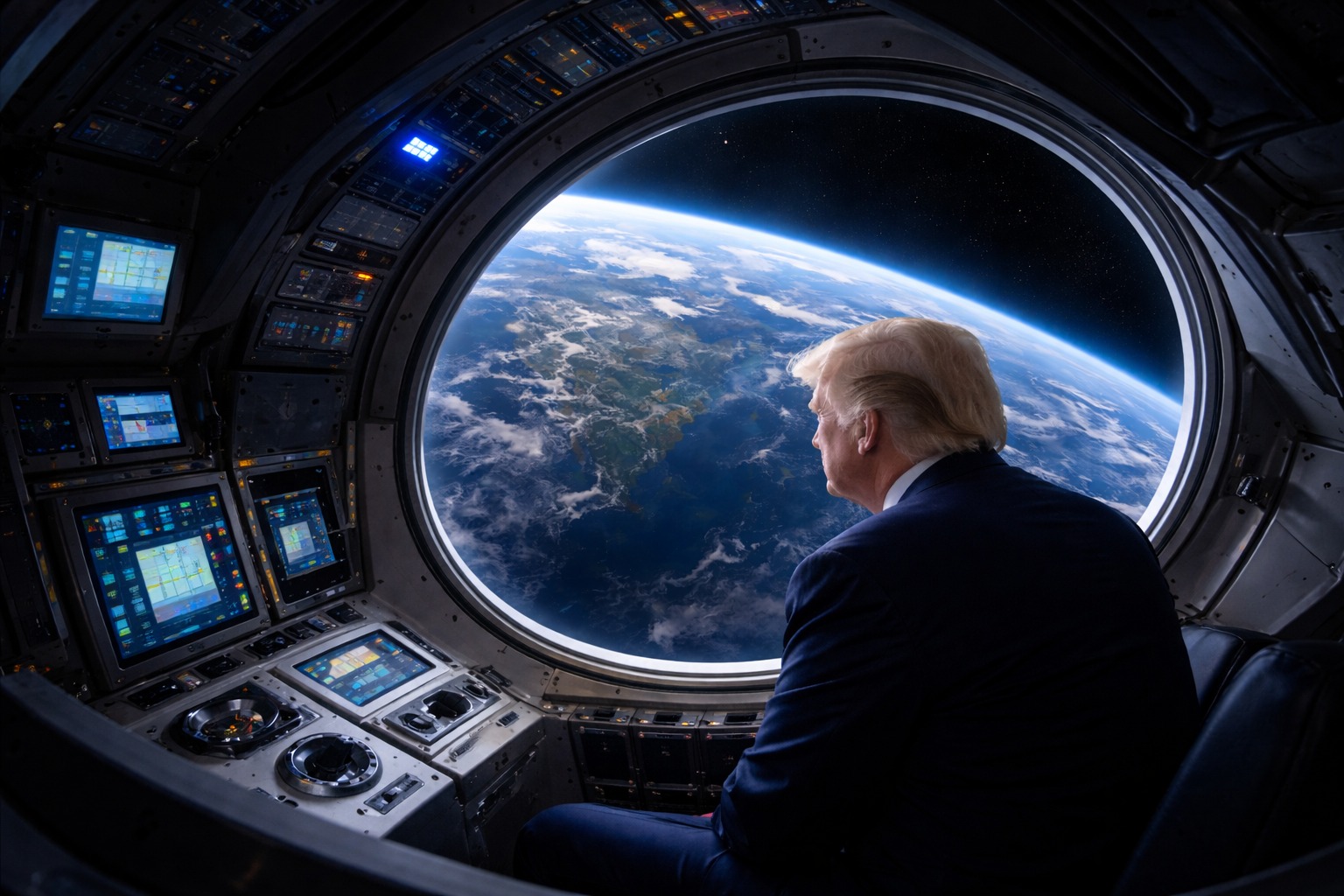
When astronauts aboard Apollo missions described the “Overview Effect,” they spoke of a cognitive shift—a realization that Earth is a fragile, unified system. Artemis II will recreate that moment for a new generation. From space, there are no borders, no ideologies—only a thin blue line protecting all life. This is not poetic abstraction; it is a scientific fact. Earth’s atmosphere, barely 100 km thick, sustains billions, yet is vulnerable to both environmental and human-made disruptions.
This perspective has influenced leaders before. Photographs like “Earthrise” in 1968 catalyzed environmental movements and global cooperation. In contrast, terrestrial politics often amplifies division—nationalism, identity, and historical grievances. Integrating the Artemis perspective into policy thinking means recognizing interdependence. Climate change, pandemics, and economic systems already operate beyond borders. Conflict, therefore, is not just local damage—it is systemic risk. Seeing Earth as one does not eliminate differences, but it reframes priorities from domination to preservation.
Chapter 6: The Language of Enemies
Language shapes reality. Studies in political psychology show that dehumanizing language—terms like “enemy,” “evil,” or worse—reduces empathy and increases public support for aggressive policies. During the Rwandan genocide, radio broadcasts played a direct role in inciting violence through rhetoric. Even in less extreme contexts, hostile language narrows diplomatic space. When leaders use inflammatory words, it signals to both domestic and international audiences that compromise is unlikely.
Modern amplification through social media worsens this effect. A single statement can reach millions instantly, triggering reactions that leaders themselves may not fully control. Diplomacy, historically, has relied on ambiguity and nuance—phrases that allow multiple interpretations and thus preserve room for negotiation. Abandoning hostile rhetoric is not about politeness; it is strategic necessity. Both sides must recognize that words can either escalate conflict or open pathways to resolution. The first step to dialogue is to stop speaking as if dialogue is impossible.
Chapter 7: The Vortex of Escalation
History warns us how quickly conflicts expand. World War I began with a regional dispute but escalated through alliances into a global catastrophe. Today, similar risks exist. The Middle East’s strategic importance—particularly energy routes near the Strait of Hormuz, through which over 20% of global oil supply passes—means any disruption has worldwide consequences. Nations like Russia, China, and European powers all have stakes, making escalation inherently international.
Geography compounds this risk. Iran’s proximity to the Caspian region and its influence across Iraq, Syria, and Lebanon creates a networked conflict environment. Proxy wars can quickly draw in multiple actors, blurring lines between local and global. Economic interdependence ensures that even distant nations feel the impact through energy prices and supply chains. Preventing escalation is not just about bilateral restraint; it is about recognizing the system-wide consequences of localized actions. Once a vortex forms, controlling it becomes exponentially harder.
Chapter 8: Words in the Digital Age
In the 21st century, leadership communication is no longer confined to official statements. Platforms like social media have turned words into immediate instruments of policy. Research shows that markets can react within seconds to political tweets, and diplomatic tensions can escalate within minutes. In such an environment, the use of crude or inflammatory language is not just undignified—it is destabilizing.
Historically, diplomatic language has been measured, even during crises. During the Cuban Missile Crisis, communications between Kennedy and Khrushchev were cautious, deliberate, and respectful despite the stakes. Contrast this with modern impulsive messaging, where emotional expression can override strategic clarity. Leadership requires discipline in communication—clarity of objectives, consistency of tone, and awareness of audience. Words must align with long-term goals, not short-term reactions. In a connected world, every sentence is a signal; it must be sent with intent.
Chapter 9: The Cost of Irreversible Paths
North Korea stands as a stark example of how prolonged conflict and isolation can lead to entrenched nuclearization. Once a nation crosses certain thresholds—technological, political, or psychological—reversal becomes nearly impossible. Decades of sanctions and confrontation have not dismantled North Korea’s program; instead, they have hardened it. This illustrates a broader lesson: escalation often creates outcomes that diplomacy later struggles to undo.
Destruction, too, has cumulative effects. Infrastructure loss, civilian displacement, and economic collapse create generational consequences. The World Bank estimates that reconstruction in conflict zones can take decades and cost hundreds of billions. Avoiding such trajectories requires early intervention—before positions harden and options narrow. The goal should not be to win conflicts at any cost, but to prevent them from reaching points of no return. Strategic patience and restraint are often more effective than force in shaping long-term outcomes.
Chapter 10: Geography as Destiny
Iran’s geography is not incidental—it is strategic. With mountainous terrain, vast deserts, and access to critical waterways, it has historically been difficult to invade and control. This was evident during the Iran-Iraq War (1980–88), where prolonged conflict led to immense casualties without decisive victory. Geography provides defensive advantages that can turn conflicts into prolonged stalemates.
Moreover, Iran’s location connects Central Asia, the Middle East, and South Asia, making it a regional hub. Any instability within it reverberates outward. Military strategies must account for such realities; quick victories are unlikely, and prolonged engagements carry high costs. Understanding geography is essential not just for warfare, but for diplomacy. It shapes incentives, constraints, and possibilities. Ignoring it leads to miscalculations, while respecting it opens pathways for realistic solutions.
Chapter 11: Lessons from COVID-19
The COVID-19 pandemic demonstrated that global challenges require collective responses. Within months, scientists across countries collaborated on vaccines, sharing data and resources at unprecedented speed. Initiatives like COVAX aimed—however imperfectly—to ensure equitable distribution. The crisis showed that when faced with a common threat, nations can transcend divisions.
At the same time, it exposed weaknesses—vaccine nationalism, supply chain disruptions, and unequal access. These lessons are directly relevant to geopolitical crises. Cooperation is possible, but it must be intentional. The same scientific collaboration that produced vaccines in record time could be mirrored in diplomatic efforts to prevent conflict. The pandemic reminded humanity that survival often depends on unity. The question is whether that lesson will be applied beyond health crises.
Chapter 12: Solving Without Creating More Problems
Problem-solving in geopolitics often suffers from escalation bias—the tendency to respond to challenges with greater force, inadvertently creating new problems. The invasion of Iraq, intended to eliminate threats, led to instability that fueled further conflict. Effective solutions require precision: addressing root causes rather than symptoms.
This involves understanding motivations, grievances, and structural factors. Sanctions, military actions, and political pressure must be calibrated to avoid unintended consequences. Creating additional crises complicates resolution and reduces options. The principle is simple but often ignored: solving one problem should not generate another. Strategic thinking requires restraint, foresight, and a commitment to long-term stability over short-term gains.
Chapter 13: Rebuilding Trust
Trust is the invisible currency of diplomacy, and once lost, it is difficult to restore. The breakdown of agreements—whether due to non-compliance or withdrawal—creates skepticism that lingers for years. Rebuilding trust requires tangible actions: ceasefires, transparency measures, and incremental agreements that demonstrate reliability.
Confidence-building measures have worked before. Arms control treaties during the Cold War, such as START, reduced tensions through verification and mutual commitments. Similar approaches can be adapted today. Trust cannot be demanded; it must be earned through consistency. Ceasefires provide the first step, signaling intent. From there, dialogue can rebuild what conflict has eroded. Without trust, even the best agreements fail; with it, even adversaries can find common ground.
Chapter 14: The View That Unites
Iran is not just a geopolitical entity; it is an ancient civilization with contributions to science, philosophy, and culture spanning millennia. Recognizing this does not negate political differences—it humanizes them. The Artemis view reminds us that all civilizations share one planet, one atmosphere, one future.
Dialogue is not defeat. It is recognition that coexistence is unavoidable. In a world facing shared challenges—climate change, technological disruption, global health—cooperation is not idealism; it is necessity. Choosing dialogue over destruction is not weakness; it is wisdom.
There is an ancient wisdom in Indian thought that reminds us that peace in the world is not built through force alone, but through the character of individuals and the righteousness of leadership. The Thirukkural, written over two thousand years ago by Thiruvalluvar, distills this idea with remarkable clarity—linking inner virtue to global harmony in a simple yet profound chain.
“When there is righteousness in the heart, there is beauty in the character.
When there is beauty in the character, there is harmony in the home.
When there is harmony in the home, there is order in the nation.
When there is order in the nation, there is peace in the world.” ~ Thirukkural
Epilogue: Returning to Earth
From space, Earth appears whole—silent, borderless, and fragile against the vastness of the cosmos. There are no visible lines of conflict, no markers of ideology—only a thin atmosphere sustaining billions of lives. And yet, every decision made on this planet—every word spoken in haste, every escalation pursued in pride—ripples across that shared sphere. The contrast is striking: unity in reality, division in perception.
The lesson, then, is not abstract but urgent. Power must be guided by perspective. History has shown that wars rarely end where they begin, and their consequences extend far beyond those who initiate them. Economic shocks, humanitarian crises, and generational trauma follow in their wake. In an interconnected world, conflict is never contained—it is transmitted. To act without this awareness is to ignore the very nature of the system we inhabit.
To remember the Artemis view is to hold a quiet discipline of thought—to pause before reacting, to weigh consequences beyond immediate gain, and to recognize that dialogue is not weakness but foresight. Ceasefires are not concessions; they are opportunities. Words are not just expressions; they are signals that shape reality. Leadership, therefore, is not defined only by action, but by restraint.
Perhaps the deeper question is not whether conflict can be avoided entirely—it cannot—but whether it can be approached with greater consciousness. Whether we can choose clarity over chaos, responsibility over reaction, and long-term stability over short-term assertion. Because in the end, there is no “other” world to retreat to. There is only this one.
And from afar, it does not look divided.

Appendix: Books, Reports, and Sources

Geopolitics, War, and Strategy

The Tragedy of Great Power Politics — John J. Mearsheimer | Why great powers compete and how miscalculations lead to conflict.
Destined for War — Graham Allison | Historical patterns of rising vs ruling powers and the risk of war.
The Prize: The Epic Quest for Oil, Money & Power — Daniel Yergin | How energy politics has shaped global conflicts and power structures.
Stockholm International Peace Research Institute (SIPRI Reports) — Leading global data on military spending, arms transfers, and nuclear arsenals.

Diplomacy and Conflict Resolution
Getting to Yes — Roger Fisher & William Ury | A practical framework for principled negotiation without escalation.
Talking to Strangers — Malcolm Gladwell | Why misunderstandings between people and nations often lead to conflict.
The Anatomy of Peace — The Arbinger Institute | How mindset and perception shape conflict and reconciliation.
United Nations Reports — Case studies and frameworks for peacekeeping and multilateral diplomacy.

Space and Perspective
The Overview Effect — Frank White | How seeing Earth from space transforms human perception and unity.
NASA Artemis Program — Official mission insights into humanity’s return to deep space exploration.
Carrying the Fire — Michael Collins | Personal reflections from an Apollo astronaut on space and Earth.

Global Systems and Cooperation
The Premonition — Michael Lewis | Inside story of pandemic response and institutional challenges.
Factfulness — Hans Rosling | Data-driven view correcting misconceptions about global progress.
World Health Organization (WHO Reports) — Evidence and coordination efforts during global health crises.

Ethics and Human Unity
Sapiens — Yuval Noah Harari | How shared human narratives shape cooperation and conflict.
The Better Angels of Our Nature — Steven Pinker | Evidence that violence has declined through institutions and reason.
Dhvanyaloka — Anandavardhana | Aesthetic philosophy showing how meaning is often suggested, not stated.
Thirukkural — Thiruvalluvar | Timeless ethical wisdom on virtue, governance, and peaceful living.